
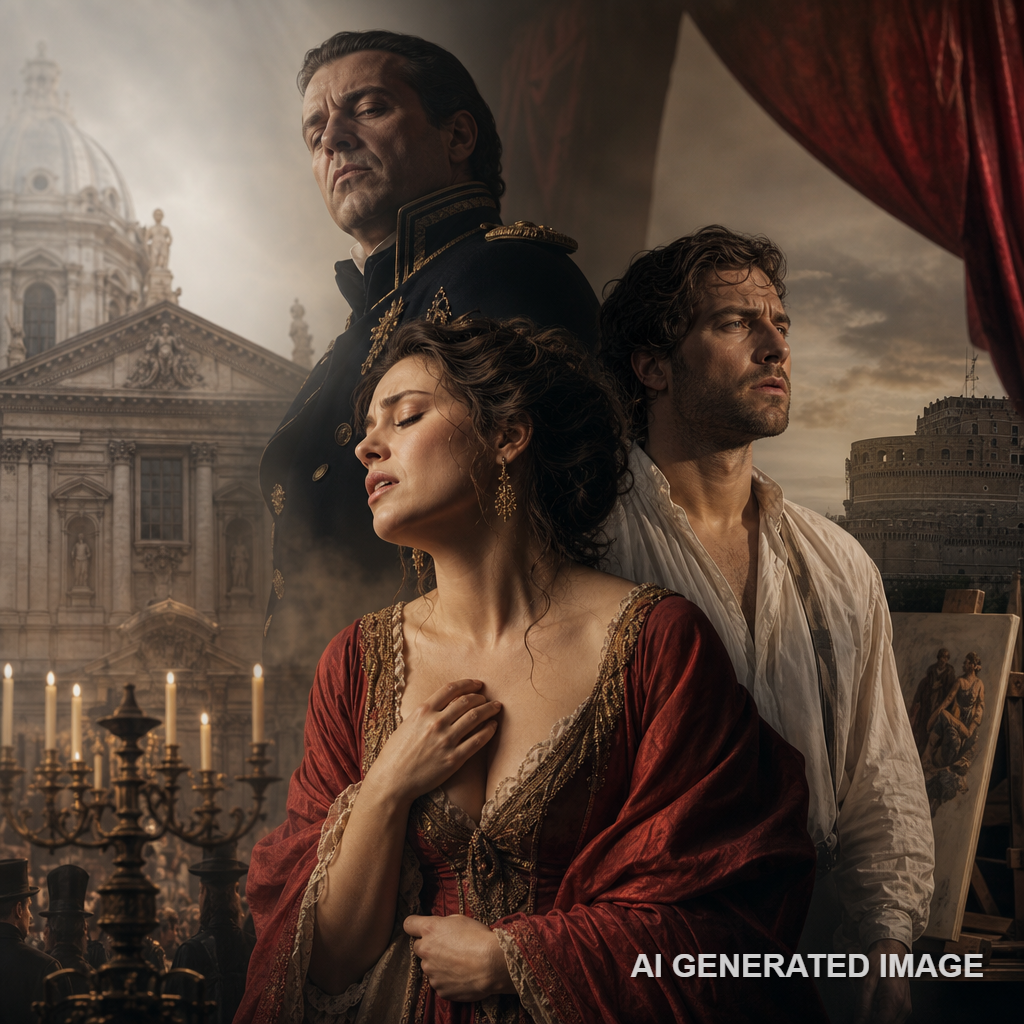
A first experience with Tosca can feel intense, even if you know little about opera. A small amount of preparation can make the performance easier to follow, especially because Puccini combines political tension, jealousy, love and religious imagery within a single day in Rome.
What to Know Before Your First Tosca
- The story unfolds during one day in June 1800.
- The opera premiered in Rome on 14 January 1900.
- The plot follows three central characters: Tosca, Cavaradossi and Scarpia.
- The action moves between several locations in Rome, giving each act a distinct atmosphere.
The story is set against a period of political uncertainty. Napoleon’s advance in Italy forms the historical background, while the personal conflict between the main characters drives the action. You do not need to know the full political context to understand the opera, but recognising that tension helps explain the decisions made by the characters.
What Makes Tosca So Powerful?
One of the reasons Tosca remains popular is the way Puccini connects the music with the characters’ emotions. The score moves between intimate moments and dramatic passages, allowing the tension to build naturally rather than relying only on the plot.
Tosca herself is at the centre of this emotional contrast. She is a successful singer, deeply in love with the painter Cavaradossi, but she is also placed in an increasingly dangerous situation. Scarpia, the chief of police, uses her feelings and fears to manipulate both her and Cavaradossi.
For a first-time visitor, it can be helpful to focus on these relationships rather than trying to understand every historical reference. Once the motivations of the three main characters are clear, the dramatic development becomes much easier to follow.
How to Prepare for the Performance
You do not need extensive opera knowledge before attending Tosca. Reading a short synopsis beforehand is usually enough to understand the main events. If possible, familiarise yourself with the names of the principal characters and the basic situation at the beginning of the opera.
It can also be useful to look through the libretto before the performance. Many opera houses provide translations or subtitles, so you can follow the dialogue even if you do not speak Italian.
For the best experience, avoid trying to predict every detail of the story. Knowing the basic plot gives you context, while leaving some moments unexplained allows the music and staging to have their full effect.
What to Expect at the Opera House
A performance of Tosca combines several elements that work together: solo singing, orchestral music, acting, lighting and stage design. The atmosphere can change quickly from quiet and intimate to dramatic, particularly as the story approaches its final act.
Arriving approximately 30 minutes before the start gives you enough time to find your seat, read the programme and settle in without rushing. The exact dress expectations depend on the venue, but smart, comfortable clothing is generally a safe choice unless the opera house specifies a particular dress code.
During the performance, remember that opera is designed to be experienced as a combination of music and theatre. You do not have to understand every musical detail to appreciate it. Following the characters, the mood and the progression of the story is enough to stay engaged.
Let the Drama Unfold
Tosca is not an opera that depends on complicated mythology or an extensive cast. Its impact comes largely from the concentrated story and the pressure placed on its three central characters.
Rather than trying to analyse every aria or historical reference during the performance, give yourself time to experience the changing atmosphere. The contrast between beautiful music and increasingly serious events is an important part of what makes the opera memorable.
For a performance listing and practical information, Tosca Opera details can help you plan the evening.
Final Thoughts
Your first Tosca does not require specialist knowledge. A basic understanding of the characters, the setting and the central conflict is enough to follow the story. From there, the music, performances and stage production can do the rest.
If you approach the opera with some context but without trying to analyse every moment, you can focus on what makes Tosca such a compelling theatrical experience: its atmosphere, powerful characters and combination of music and drama.
Author Profile

- Meet our expert author, Daniel Thompson, who is passionate about traveling and exploring new places. With years of experience in the travel industry, Joanna has visited some of the most beautiful destinations in the world and loves to share her experiences with others. As a regular contributor to TongTrip.com, Joanna provides readers with inspiring travel articles, helpful guides, and insightful travel stories from our community of users. She also helps travelers plan their trips from start to finish using our travel planning tool. Join the TongTrip community today and share your travel experiences with Joanna and other like-minded travelers.
Latest entries
 Travel experiencesAugust 20, 2026Your first Tosca evening. How to prepare for the performance?
 UncategorizedJune 30, 2026How to Book and Enjoy The 3 Tenors and Soprano Concert in Rome?
 Travel inspirationApril 17, 2026Best opera in Rome: 5 performances and venues worth choosing
 Travel experiencesMay 29, 2024What Are Rwanda Gorilla Tours Like?


